


Living Benefits of Life Insurance: Debunking the "Death Benefit Only" Myth
What if the protection you bought for your family's future could actually be the very anchor that keeps you steady during a health crisis today? Most people still view life insurance as a "death-only" contract, but that traditional perspective is quickly becoming a relic of the past. In 2026, the living benefits of life insurance have evolved into a vital financial resource, allowing you to access your policy's value while you're still alive to face the challenges of illness or injury.
We understand the weight of rising healthcare costs in Florida and the quiet fear of becoming a financial burden on those you love most. It's a heavy stressor to navigate alone, but you can find a sense of calm by understanding your options. This article explains how to access cash from your policy during your lifetime, providing a simplified look at chronic illness riders and tax-advantaged growth. We'll also cover your essential consumer rights, including Florida's 30-day grace period for payments, so you can turn your policy into a reliable harbor for your family's well-being.
The "Death Benefit Only" Myth: Why Modern Life Insurance Has Changed
For decades, many families viewed life insurance as a "sunk cost," a premium paid today for a benefit they would never personally see. This traditional mindset assumes the policy only functions after you're gone. However, modern living benefits of life insurance have transformed these contracts into dynamic financial tools. Instead of waiting for the inevitable, these features allow you to access a portion of your death benefit while you're still alive, specifically when a qualifying health event strikes.
To better understand this concept, watch this helpful video:
The evolution of these riders is a direct response to the rising costs of modern medical care. While older policies were rigid, products like Universal Life Insurance often include Accelerated Death Benefit options that provide liquidity when it's needed most. These living benefits act as a financial bridge that converts your future legacy into current security.
Myth #1: "I have to be terminally ill to access my policy"
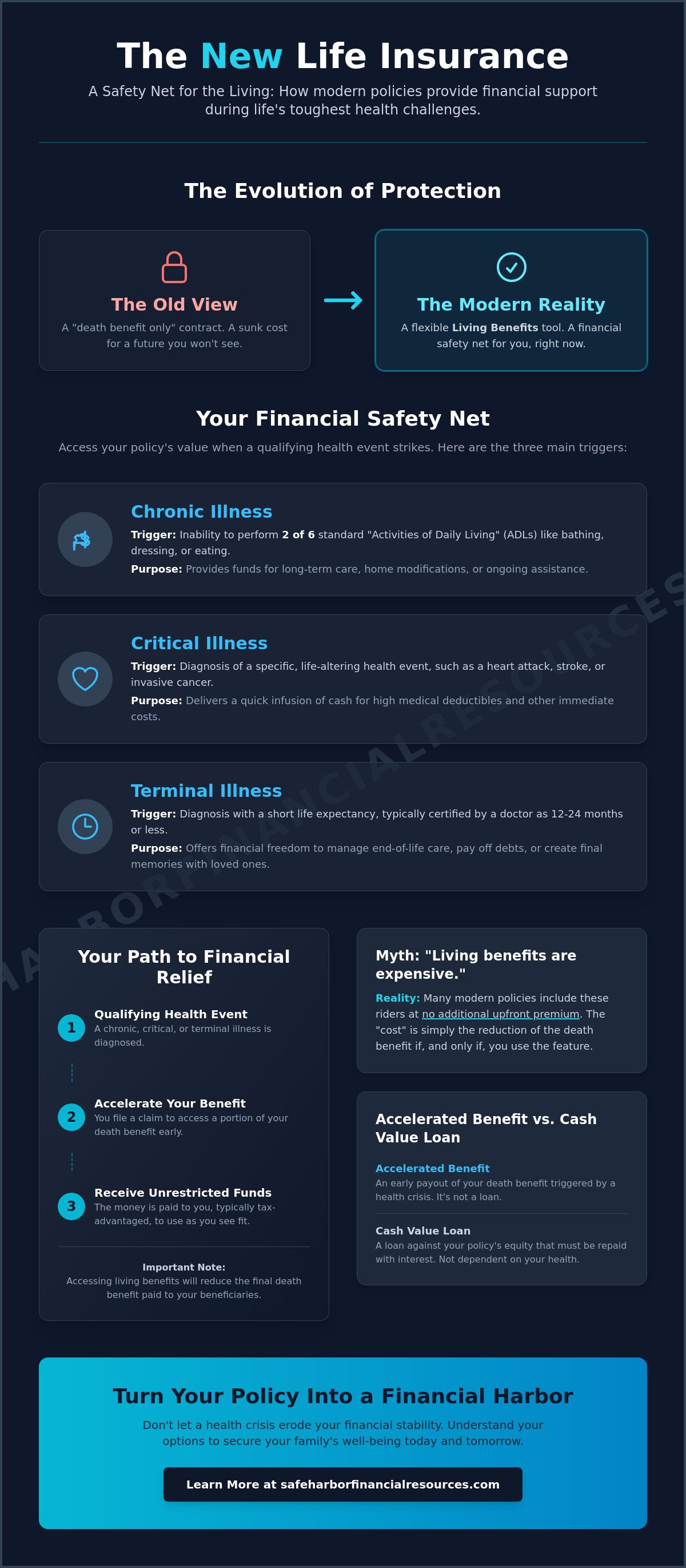
Many people believe you must face a terminal diagnosis with a short life expectancy to trigger a payout. That isn't the case anymore. Modern riders often cover chronic and critical illnesses. For chronic conditions, the trigger is usually based on "Activities of Daily Living" (ADLs). This includes the inability to perform basic tasks like bathing, dressing, or eating independently. If a doctor certifies you can't perform two out of six standard ADLs, your policy can provide the funds to pay for necessary care or modifications to your home.
The Emotional Shift: From Legacy to Life Support
Think of your policy as a sturdy refuge during an unexpected storm. When a health crisis hits, the primary source of anxiety is often the weight of medical debt and the fear of draining your savings. By shifting the focus from a distant legacy to active life support, the living benefits of life insurance replace that stress with a sense of calm. You aren't just planning for an end; you're securing a pre-funded safety net that protects your dignity and your family's stability while you are still here to experience it.
How Living Benefit Riders Work: Your Practical Guide
Understanding how these features function is like learning the layout of a safe harbor before the storm arrives. Most modern policies categorize these protections into three primary "harbors": terminal, chronic, and critical illness riders. While terminal riders are familiar, the critical illness trigger is a powerful addition. It activates upon specific diagnoses such as a heart attack, stroke, or invasive cancer. These events are life-altering but don't always require long-term care. Having a living benefits of life insurance strategy ensures you have immediate capital when these medical emergencies occur.
A common misconception is that adding these protections will drastically increase your monthly premium. In reality, many living benefit riders are included in policies at no upfront cost. The "cost" is often only applied if you actually choose to use the benefit, at which point the death benefit is reduced. Once the funds are released, they are typically unrestricted. You can use the money to cover high-deductible medical treatments, pay off your mortgage, or even fund family travel to create memories during a recovery.
Chronic vs. Critical Illness: Knowing the Difference
It helps to view these two riders through different lenses. Chronic illness riders focus on long-term care needs, usually triggered when you can't perform basic daily tasks. Critical illness riders, however, are designed for sudden, major health events that require a quick infusion of cash. These riders don't replace your Medicare or private health insurance; they supplement them. They provide the "gap" funding that standard health plans often miss. If you're curious about how these fit into your current plan, you can connect with a professional guide to review your coverage.
Cash Value vs. Accelerated Benefits
When looking at the Living Benefits of Life Insurance, it's vital to distinguish between two different sources of liquidity. Permanent policies, like Whole or Universal Life, build cash value that you can borrow against over time. This is a loan from the insurance company using your equity as collateral. Accelerating a death benefit is different. You aren't taking a loan; you're receiving a portion of the future payout early due to a health event. Both provide vital liquidity, but they serve different financial goals depending on whether you need a simple loan or a health-related payout.
Why Living Benefits are Essential for Palm Beach Gardens Residents
Living in Palm Beach Gardens often means enjoying a lifestyle built on years of careful planning and hard work. However, Florida's specialized care costs can quickly erode even the most robust retirement assets. By utilizing the living benefits of life insurance, you create an additional layer of protection that keeps your financial plans intact even during a health crisis. Safe Harbor Financial Resources serves as your local guide, helping you understand these options so your focus stays on recovery rather than mounting bills.
One of the most significant advantages for local families is the ability to "age in place." Many residents prefer to stay in the comfort of their own homes rather than move to a care facility. The funds from living benefits can be used to hire professional in-home care or make necessary home modifications. This flexibility ensures your home remains the sanctuary it was always meant to be, regardless of your health status.
Protecting the Florida Retirement Dream
Facing a major illness often creates a "double hit" on your finances. You might lose income while simultaneously facing a surge in out-of-pocket medical expenses. This combination can be devastating for a fixed retirement budget. Having a living benefit ensures that a health event won't force the sale of your local home or the liquidation of your legacy. It provides the calm stability you need to weather the storm without sacrificing the lifestyle you've earned.
Your Local Ally in Palm Beach County
You deserve a partner who understands the specific needs of our community. We invite you to connect with Dennis Richards for a personalized Safety Assessment. This review can help you identify if your existing policies have hidden potential for living benefits or if a more modern strategy is needed to secure your future. You can also visit Dennis Richards on Facebook for regular community updates and practical financial tips. Let's work together to ensure your financial harbor is truly secure.
Secure Your Financial Harbor for the Years Ahead
Modern life insurance has moved far beyond a simple legacy for your heirs. It's now a versatile financial tool that provides stability when life throws an unexpected curveball. By understanding the living benefits of life insurance, you've taken the first step toward protecting your retirement savings and ensuring you have the resources to face a health crisis with dignity. Whether it's funding specialized care or providing the peace of mind to stay in your home, these protections turn a "what if" into a manageable plan.
You don't have to navigate these complex waters alone. With over 20 years of experience serving our neighbors in Palm Beach Gardens, Safe Harbor Financial Resources is here to act as your steady guide. As an independent agency, we work with multiple A-rated carriers to find the specific coverage that fits your life. We provide specialized expertise in Florida-specific retirement security to ensure your plan is as resilient as it is clear.
Ready to secure your harbor? Schedule a complimentary Living Benefits review with Safe Harbor Financial Resources today. We're here to help you move forward with confidence and clarity.
Frequently Asked Questions
Are living benefits the same as long-term care insurance?
Living benefits are not the same as standalone long-term care insurance, although they share the goal of protecting your savings from medical costs. Long-term care insurance is a specific policy designed for nursing homes or home health care. In contrast, living benefits are riders on a life insurance policy. These riders allow you to accelerate a portion of your death benefit to use for any purpose during a qualifying health event.
Will accessing living benefits reduce the amount my beneficiaries receive?
Yes, accessing the living benefits of life insurance will reduce the final payout to your beneficiaries. When you choose to receive a portion of your benefit early to cover medical costs, that payout is deducted from the policy's total value. It's a trade-off that provides current security. You're essentially using your future legacy to provide vital support for yourself and your family when you need it most.
Do I have to pay taxes on the money I receive from living benefits?
In most cases, the funds you receive from living benefit riders are not considered taxable income. The IRS generally treats these payments as an advance of the death benefit, which is typically tax-free. This allows you to use the full payout to address your immediate needs without the stress of a surprise tax bill. You should always verify your specific situation with a qualified tax professional to be certain.
Can I add living benefits to an existing life insurance policy?
Whether you can add these features to an existing policy depends on your insurance carrier and the type of coverage you own. Some companies allow you to add riders after the policy is active; others require them to be selected at the time of purchase. If your current plan doesn't include these protections, we can help you review your options to see if a new policy with living benefits of life insurance is a better fit.


Comments